

Radisson Announces Additional High-Grade Drill Results at O'Brien Including 23.37 g/t Au over 4.0 Metres and the Deepest Intercept to Date
Announcement posted by ACN Newswire 28 Jan 2026

Rouyn-Noranda, Quebec--(ACN Newswire - January 27, 2026) - Radisson Mining Resources Inc. (TSXV: RDS) (OTCQX: RMRDF) ("Radisson" or the "Company") is pleased to announce assay results from seven new drill holes completed at its 100%-owned O'Brien Gold Project ("O'Brien" or the "Project") located in the Abitibi region of Québec. The seven holes are the latest completed as part of the Company's ongoing 140,000-metre step-out drill program designed to test the overall scope of gold mineralization at the Project (see Radisson news release dated October 16, 2025). Three separate and equally significant results are contained within the new data (summarized below, and in Figure 1):
1. Broad Mineralized Zones with High-Grade Vein Intercepts at "Trend #1", Extending New Mineralization to 1,450 Metres Vertical Depth, 375 Metres Below the Existing Mineral Resources
OB-25-322W3 intersected 23.37 grams per tonne ("g/t") gold ("Au") over 4.0 metres (core length) including 60.60 g/t Au over 1.5 metres and 2.50 g/t Au over 19.0 metres including 4.94 g/t Au over 1.5 metres and including 3.93 g/t Au over 3.0 metres;
OB-25-322W4 intersected 2.37 g/t Au over 11.5 metres including 10.89 g/t Au over 1.0 metre;
2. Completion of Final 14th and 15th Wedges from Pilot Hole OB-24-337, Continuing the Delineation of New Mineralization in Multiple Veins Beneath the Historic Mine Workings
- OB-25-337W15 intersected 5.38 g/t Au over 4.5 metres including 8.86 g/t Au over 1.5 metres;
- OB-25-337W14 intersected 1.49 g/t Au over 16.1 metres including 4.26 g/t Au over 1.5 metres and including 3.37 g/t Au over 1.5 metres;
3. Deepest Ever Intercept Beneath the Historic Mine with a New, Deep Pilot Hole Extending Mineralization to 1,620 Metres Vertical Depth and Providing Platform for Further Drilling
- OB-25-378 intersected 15.70 g/t Au over 1.1 metres;
Matt Manson, President and CEO: "This latest batch of drill assays from O'Brien contain notable results from several areas of focus in our 140,000 metre step-out drill program. We continue to push the limits of known mineralization at O'Brien outwards and downwards. Two wedges completed from drill hole OB-24-322 demonstrate more characteristic zones of broad and mineralized alteration with high-grade quartz-sulphide-gold veins, pushing the known extents of the Project's "Trend #1" to a new depth extent of 1,450 metres. Beneath the historic O'Brien Mine, we have been reporting for the past 12 months the progressive delineation of a broad system of high-grade veins showing good continuity with the former mine workings above. The final two wedges drilled from the pilot hole OB-24-337 have also successfully intercepted these veins with reliable consistency. In fact, each of the fifteen wedges drilled from this pilot hole have returned vein intercepts with grades and thicknesses consistent with the Project's mineral resources: a 100% success rate in this developing area. Now, new pilot hole OB-25-378, representing a step-down in depth again, has intercepted further, multiple mineralized zones and high-grades, pushing this area of gold mineralization down to 1,620 metres vertical depth, the deepest intercepts yet achieved at the Project. We have not yet found the bottom of the O'Brien gold system. Six rigs are active at the Project site, with two more rigs mobilizing shortly."
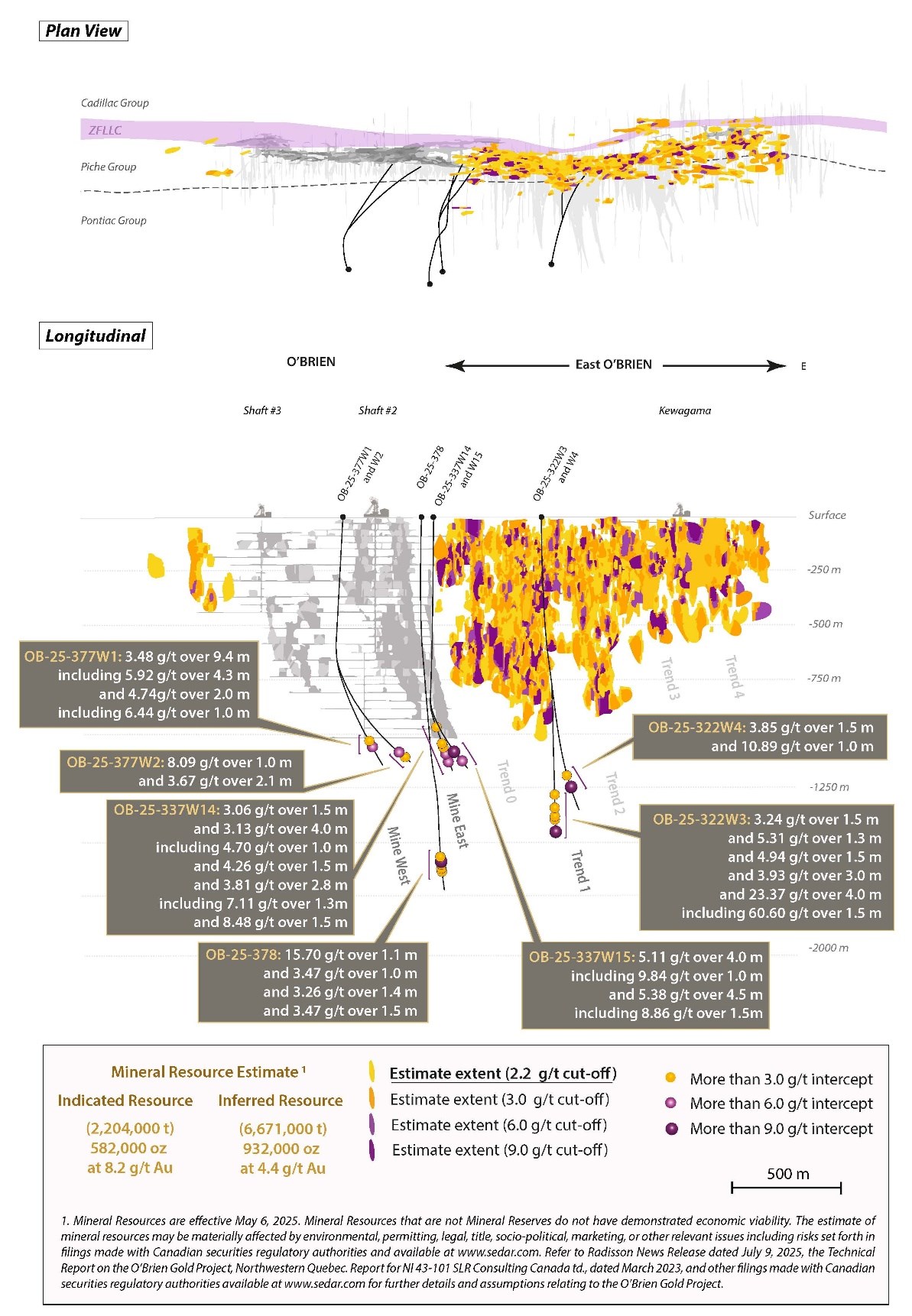
Figure 1: Longitudinal Vertical Section and Plan View of Gold Vein Mineralization and Mineral Resources at the O'Brien Gold Project, with Today's Drill Holes Illustrated
To view an enhanced version of this graphic, please visit:
https://images.newsfilecorp.com/files/10977/281737_74e08c8d6491c912_001full.jpg

Notes on Calculation of Drill Intercepts:
The O'Brien Gold Project Mineral Resource Estimate effective May 6, 2025 ("MRE") utilizes a 2.20 g/t Au bottom cut-off, a US$2,000 gold price, a minimum mining width of 1.2 metres, and a 40 g/t Au upper cap on composites. Intercepts presented in Table 1 are calculated with a 3.00 g/t Au bottom cut-off. True widths, based on depth of intercept and drill hole inclination, are estimated to be 30-80% of core length. Table 2 presents additional drill intercepts calculated with a 1.00 g/t bottom cut-off over a minimum 1.0 metre core length so as to illustrate the frequency and continuity of mineralized intervals within which high-grade gold veins at O'Brien are developed. Lithology Codes: PON-S3: Pontiac Sediments; V3-S, V3-N, V3-CEN: Basalt-South, North, Central; S1P, S3P: Conglomerate; POR-S, POR-N: Porphyry South, North; TX: Crystal Tuff; ZFLLC: Larder Lake-Cadillac Fault Zone.
Gold Mineralization at O'Brien
Gold mineralizing quartz-sulphide veins at O'Brien occur within a thin band of interlayered mafic volcanic rocks, conglomerates, and porphyritic andesitic sills of the Piché Group occurring in contact with the east-west oriented Larder Lake-Cadillac Break ("LLCB"). Gold, along with pyrite and arsenopyrite, is typically associated with shearing and a pervasive biotite alteration, and developed within multiple Piché Group lithologies and, occasionally, the hanging-wall Pontiac and footwall Cadillac meta-sedimentary rocks.
As mapped at the historic O'Brien mine, and now replicated in the modern drilling, individual veins are generally narrow, ranging from several centimetres up to several metres in thickness. Multiple veins occur sub-parallel to each other, as well as sub-parallel to the Piché lithologies and the LLCB. Individual veins have well-established lateral continuity, with steeply plunging grade shoots developed over significant lengths. Based on the historic data available, it is clear that the former mine was "high-graded", with mining focussed on a main central stope and parallel veins identified but left undeveloped.
The historic O'Brien mine produced over half a million ounces of gold from such veins and shoots at an average grade exceeding 15 g/t Au and over a vertical extent of at least 1,000 metres. Modern exploration has focussed on delineating well developed vein mineralization to the east of the historic mine, with additional high-grade shoots becoming evident in the exploration data over what has been described as a series of repeating trends ("Trend #s 0 to 5").
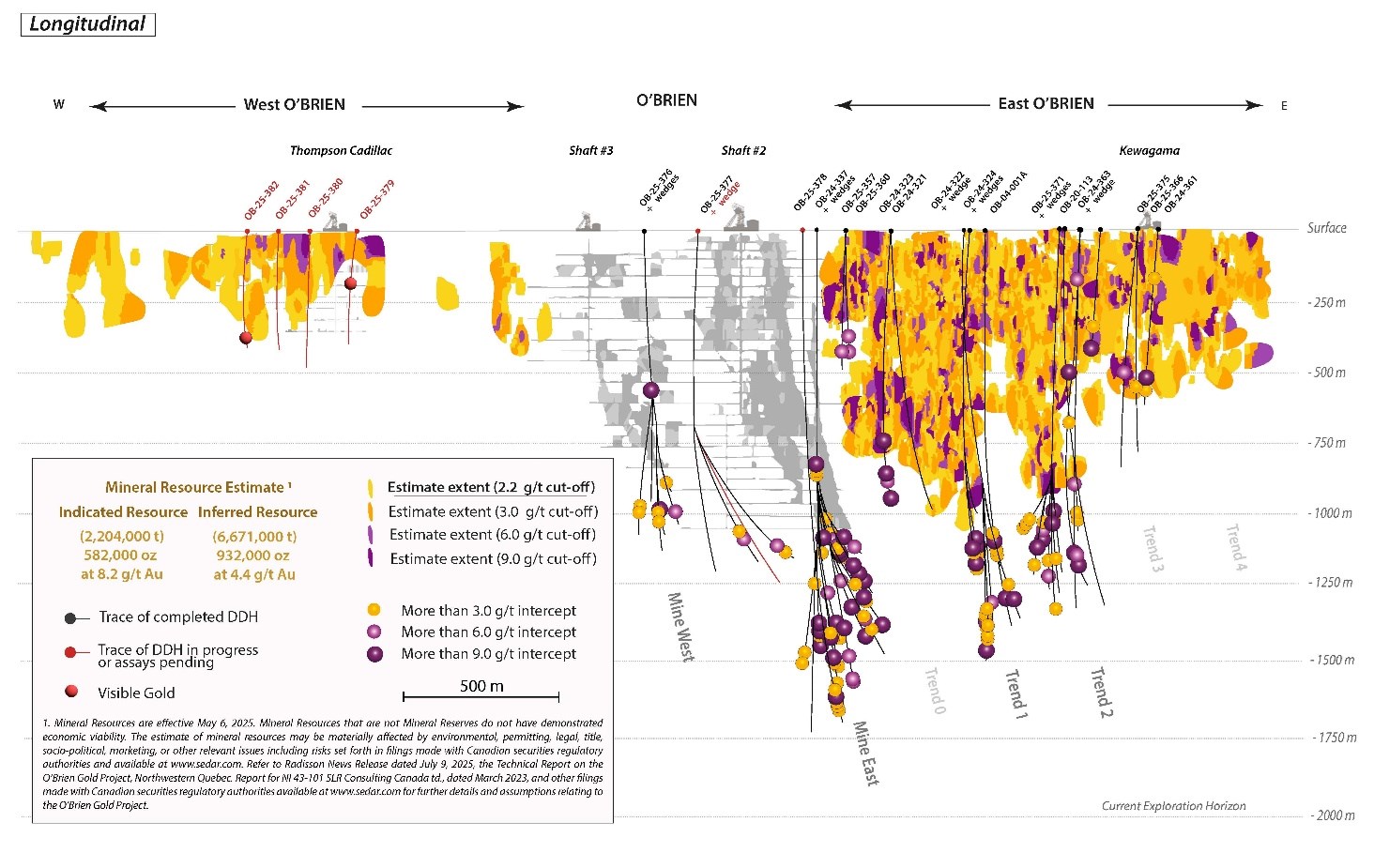
Figure 2: Deep Step-Out Drill Holes Completed and/or Published by the Company since December 2024
To view an enhanced version of this graphic, please visit:
https://images.newsfilecorp.com/files/10977/281737_74e08c8d6491c912_003full.jpg
Step-Out Drilling at O'Brien
Since the end of 2024, Radisson has been pursuing a program of broad step-outs beneath the historic O'Brien Gold mine and the existing mineral resources designed to test the extent of mineralization at the Project. This drilling is accomplished with pilot holes followed by wedges and directional drilling to maximize drill efficiency. On October 16, 2025, Radisson announced the expansion of the step-out drill program to 140,000 metres employing an eventual eight drill rigs. Since this program began, 84% of completed drill holes have intersected gold mineralization with grades and core-lengths consistent with the Project's Mineral Resources (Table 2).

The origin of the step-out drill program was the deep pilot hole OB-24-337, which was the first exploration drill hole located below the former mine workings since mining ended in 1957. This hole intersected 31.24 g/t Au over 8.0 metres, including 242.0 g/t Au over 1.0 metre at approximately 1,500 metres vertical depth (see Radisson news release dated December 16, 2024). With today's results, a full complement of assay results from all fifteen wedges drilled from OB-24-337 have now been reported and up to eight gold-bearing veins have been delineated. Drilling in this area will now focus on new pilot hole OB-25-378 which has been successfully completed to a vertical depth of 1,740 metres. This hole has returned multiple zones of alteration and gold mineralization, showing continuity with the multiple-vein system modelled above, and a high-grade vein intercept of 15.70 g/t Au over 1.1 metres at 1,620 metres vertical depth, the deepest intercept ever returned at the Project. Taken together, the results extend the area of new mineralization beneath the historic mine workings to approximately 250 metres (east-west) by 600 metres (vertical). Drilling of the first wedge from pilot hole OB-25-378 is currently underway.
Today's release includes drill assays from two wedges completed from pilot hole OB-24-322 testing the downward extension of the Project's "Trend #1". Both wedges returned broad zones of mineralized alteration with high-grade vein intercepts, including OB-25-322W3 with 23.37 g/t Au over 4.0 metres including 60.60 g/t Au over 1.5 metres. Recall that drilling in this area has returned similarly high-grade intercepts, including OB-24-324 with 27.61 g/t Au over 6.0 metres including 102.0 g/t Au over 1.1 metres and 6.83 g/t Au over 10.0 metres including 40.2 g/t Au over 1.5 metres, and the OB-24-322 pilot hole itself which returned 8.75 g/t Au over 5.2 metres including 27.2 g/t Au over 1.4 metres (Figure 3 and Radisson news release dated September 24, 2024). These results, taken together, have extended gold mineralization at Trend #1 to 1,450 metres vertical depth, 375 metres below the current Mineral Resources.
Today's release also includes results from two wedges from pilot hole OB-25-377 located between the western and eastern portions of the former mine (Figure 1). These holes have returned multiple zones of mineralization, such as OB-25-377W1 with 3.48 g/t Au over 9.4 metres including 5.92 g/t Au over 4.3 metres. This area had previously been thought to have lower potential for new mineral resources, given the absence of mining stopes above. The new intercepts illustrate the broad extent of the O'Brien gold mineralizing system and the high-grading nature of the former mine.
Read more: https://www.acnnewswire.com/press-release/english/104837/